As a parent, it can be tempting to hover when your child is exploring something new — especially when your child is living with a visual impairment.
But sometimes, the playground becomes more than just a place to play. It becomes a place to practice confidence, independence, problem-solving, body awareness, and trust.
Recently, I noticed Dylan becoming more interested in exploring the jungle gym. Usually, she is more of a swing girl, but this time she wanted to move around, try different parts of the playground, and figure out what her body could do in that space.
As I watched her, I noticed the techniques she was already using.
She trailed up the steps. She stayed to one side. She listened for other children. She used both hands to explore the sides of the tunnel. She crouched slightly as she moved through, then stood up once she reached the other side.
I could tell she was mentally mapping the playground as she moved.
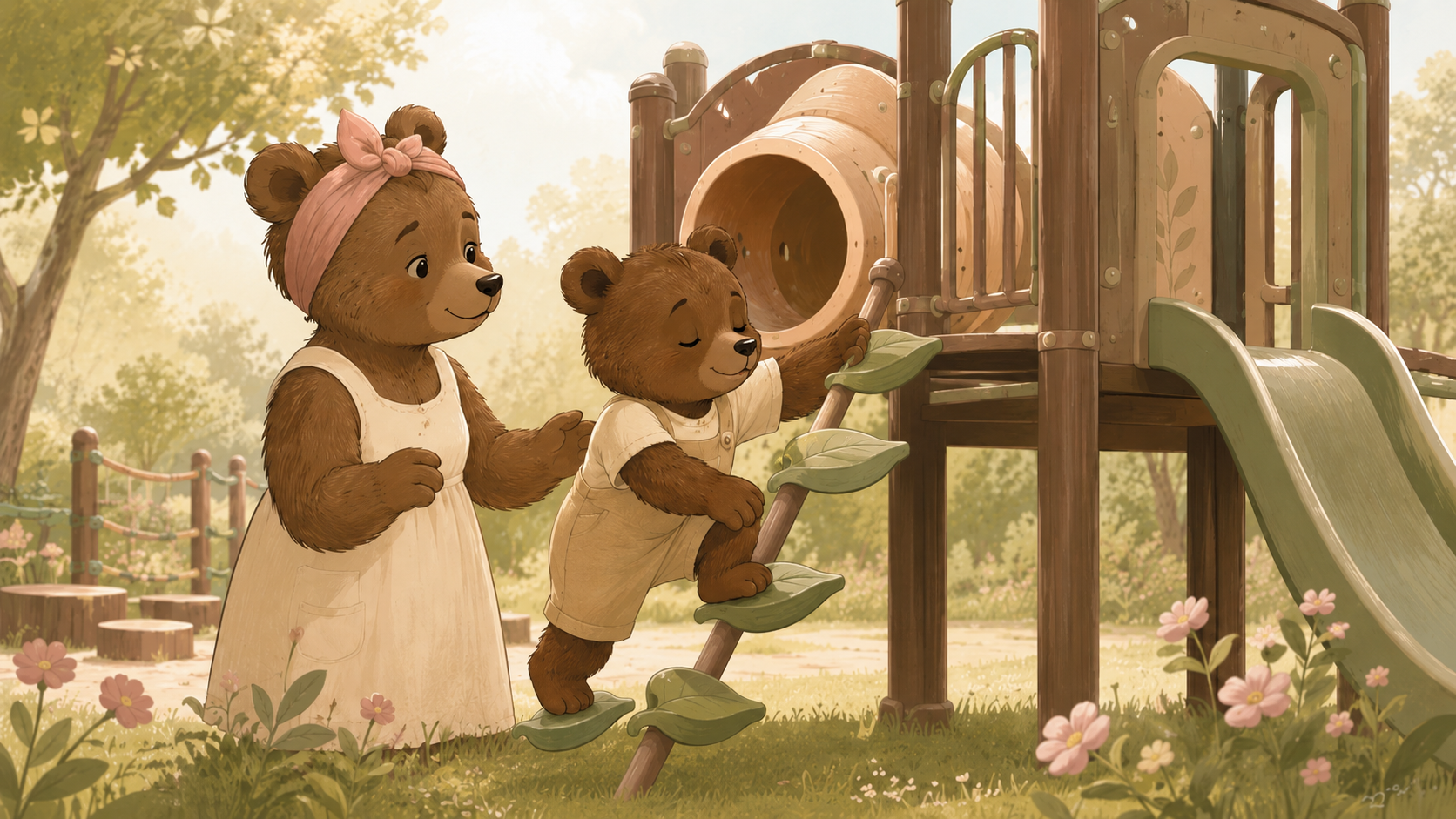
Then she reached a leaf-shaped climbing area connected to a pole, and she wanted to climb down. That was the part where I stepped in to coach her.
I did not want to take over, but I could see that a little guidance could help her move through that part more safely and efficiently.
I reminded her to slow down and find a safe landing with her foot first. I told her to make sure there was enough room for her foot before moving. If one spot did not feel safe, she could use her foot to search for another place to step.
That is a real-life problem-solving skill.
When a child is living with a visual impairment, playground exploration can involve more than climbing and sliding. It can include body awareness, listening, trailing, safe foot placement, memory, confidence, and critical thinking.
And Dylan got it.
After that, she wanted to go back around and find the slide. This time, I stepped back a little because I knew she had already started mapping the playground in her mind.
She went back through the tunnel, trailed both sides, crossed the shaky bridge, and found her way to the slide.
Years ago, I taught her to assume that a slide may have a bar, bridge piece, or something above it, so she should duck before going down. That reminder had become second nature to her.
She ducked, positioned herself, and went down the slide.
That moment reminded me that confidence is built brick by brick.
Sometimes we coach.
Sometimes we guide.
Sometimes we help our cubs brush up on a technique.
And sometimes we give them space to use what they learned.
Playground confidence is not just about climbing or sliding. It is about helping our children build trust in their bodies, their memory, their problem-solving skills, and their ability to explore the world around them.
And as parents, we build confidence too. We learn how to support their independence without taking over the entire experience.
Not everything I share is one cub fits all. Every cub, family, and journey is different. Raising a child living with visual impairments is not hard — it’s just different.